White spotting is one of the most common coat patterns in domestic cats. From tuxedo cats and harlequins to the striking Van pattern, white spotting occurs when pigment-producing cells fail to reach every part of a kitten’s skin during development. The amount of white varies tremendously, making every cat’s markings unique.
The wide variety of white spotting patterns in cats is the result of genetics and early fetal development. White spotting is primarily associated with variations in the KIT gene and is inherited as a dominant trait, meaning a cat only needs to inherit one copy of the gene for white spotting to occur. Cats that inherit two copies generally have more white fur than cats with only one copy.
White markings most commonly appear first on the paws, chest, belly, and face because pigment-producing cells, called melanocytes, migrate outward from along the developing spine during embryonic development. If some melanocytes do not reach certain areas before development is complete, those areas lack pigment and become white. Areas reached last are the most likely to remain white.
How white spotting is inherited
A cat with just one copy of the white spotting gene (S), sometimes also called the piebald gene, is considered to be a heterozygote.
Cats with two copies of the white spotting gene (SS) are homozygotes and generally tend to be more than 50% white. Homozygotes, because they have two copies instead of just one, often have more white spotting, meaning that they are medium or high-grade.
Heterozygotes (Ss) are often low-grade or medium-grade on the scale of white spotting and have less than 50% white fur.
Because both heterozygote and homozygote cats can fall in the mid-range of the grade scale, it can be difficult to determine if they have one or two copies of the gene. The S allele is incompletely dominant, meaning the degree of white spotting varies among cats.
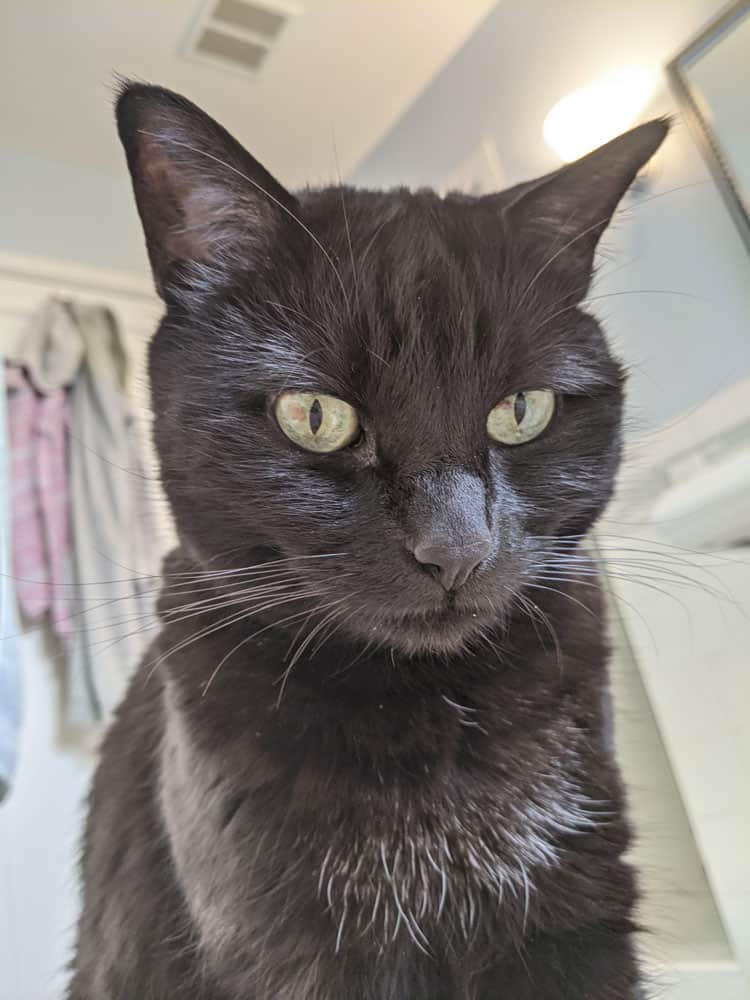
Some cats may appear to have no white spotting at all but actually have a few white hairs. These cats can look like they don’t have any white coloring at all but may actually have a few white hairs on their belly or on the underside of their tail, meaning that they do, in fact, have a copy of the white spotting gene.
It is important to note that the white spotting gene isn’t believed to have an impact on the pattern of spotting. Instead, it is responsible for the amount of spotting on a cat’s coat. While the KIT gene largely determines the amount of white, researchers continue to study the additional genetic and developmental factors that influence the exact size and placement of white patches.
The different grades of white spotting in cats
To better understand and be able to describe white spotting, researchers have developed a method of measuring the amount of white spotting a cat has in contrast with the rest of its coat.
| Pattern | Amount of white | Typical markings |
|---|---|---|
| Locket | <10% | Small chest patch |
| Tuxedo | 20–40% | White chest and paws |
| Bicolor | ~50% | Roughly equal white and color |
| Harlequin | 60–80% | Mostly white with colored patches |
| Van | >80% | Color mainly on head and tail |
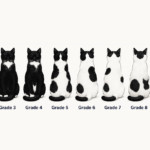
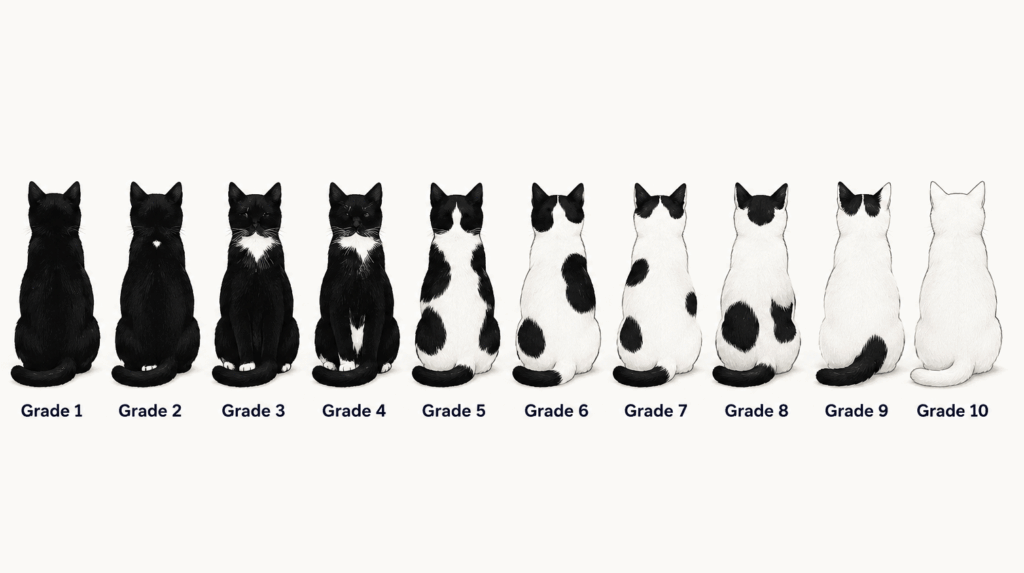
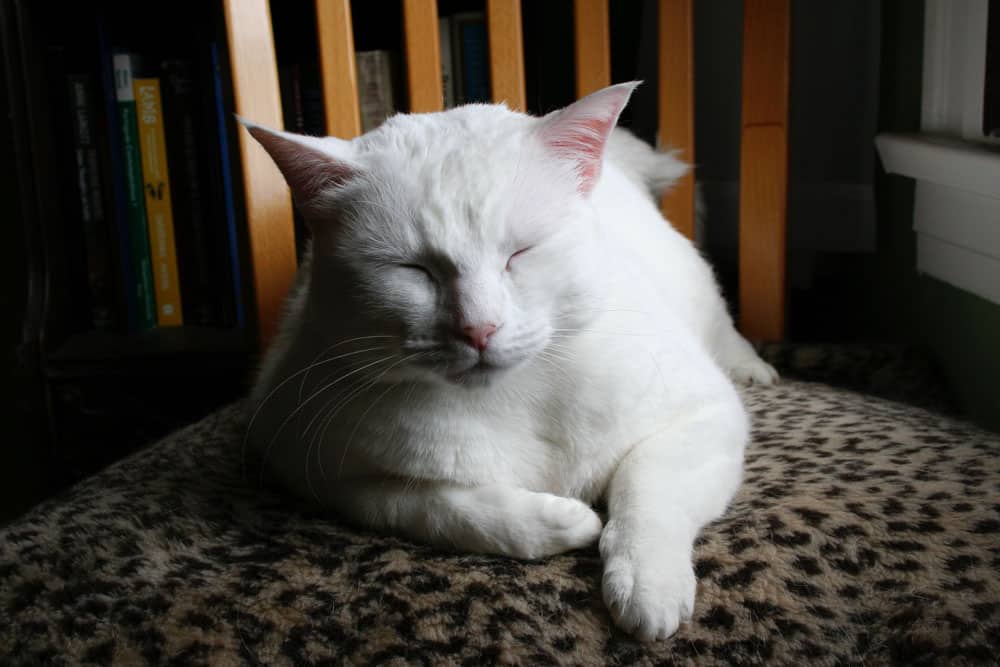
This scale consists of ten grades, with grade one representing a cat with zero white fur and grade ten representing an all-white cat (Robinson 1991).
Grade One: Grade one refers to a cat who has no white whatsoever because it has not inherited the white spotting gene. This would also sometimes be called a non-white spotted cat.
These cats can be entirely one solid color like a black cat, or have a mixture of fur colors and patterns with no white fur at all.
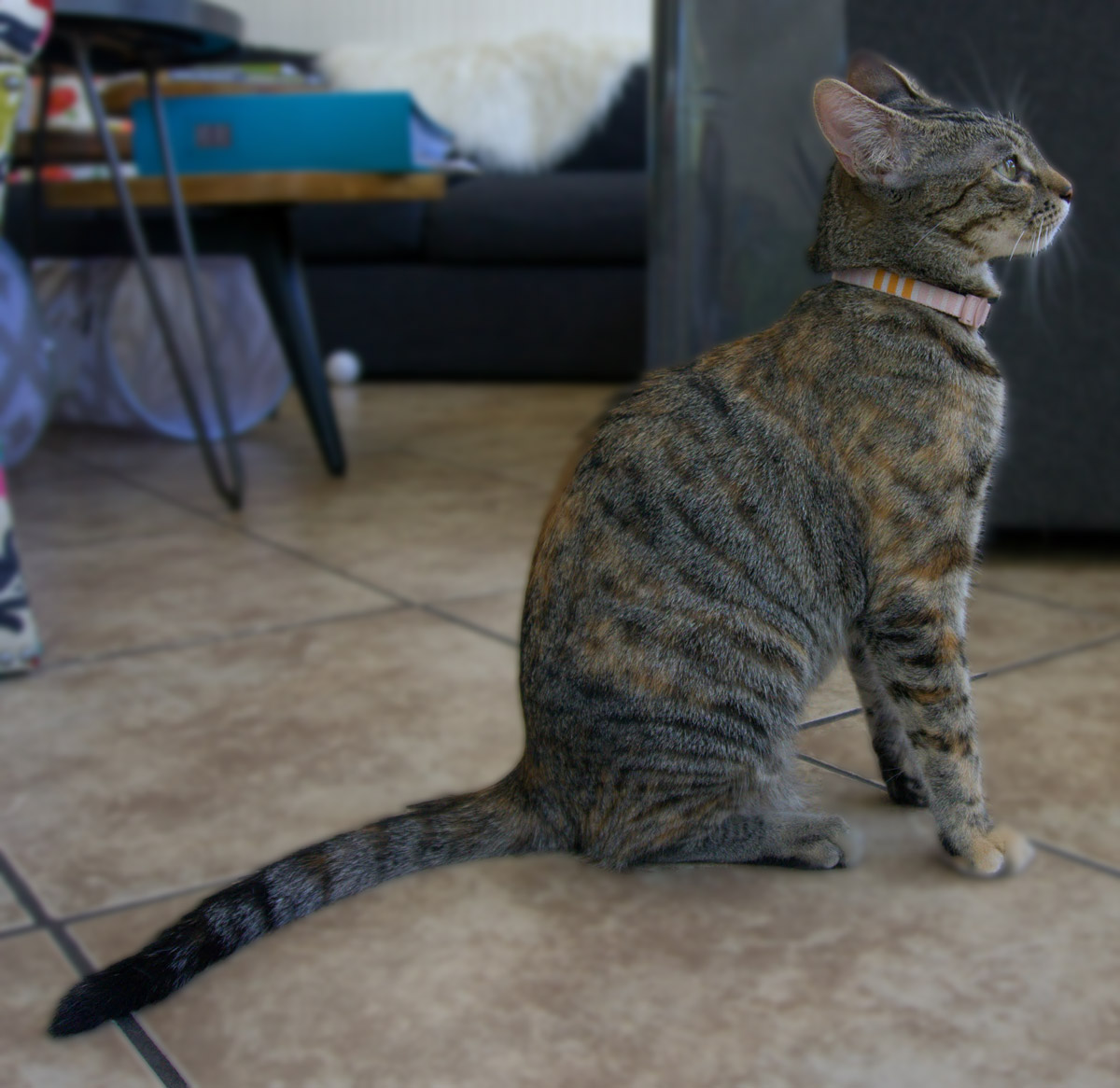
Grade Two: Grade two is used to describe a cat with just a few small white areas on its body. An example might be a cat with a white locket, a white spot on its belly, or white toes.
Grade Three: Grade three refers to a cat with a bit more white spotting than the previous grades. These cats may have small white spots on their toes, belly and a large section of white on their chest. A common pattern that reflects this is the mitted pattern.
Grade Four: The fourth grade describes what many would call a tuxedo cat. These cats have white chests, a larger area of white on their belly, and often white on their feet and tail.
Grade Five: Grade five is used to refer to a bicolor cat. A bicolor cat is 50% white, while the other 50% is made up of another color or colors. This usually presents as a white chest, white facial markings, and a white underbelly. A common pattern seen in these cats is the mask and mantle pattern.
Grade Six: Grade six is when we start to see cats with more white than any other color. The cat will be mostly white with some color spots or marking on its face, shoulders, back, rear end, and tail. A common pattern seen in these cats is the cap and saddle pattern.
Grade Seven: Similar to grade six, grade seven cats will be mostly all white, with the exception of some small pieces or sections of color on various parts of their body. A common pattern seen in grade seven cats is the magpie pattern.
Grade Eight: Grade eight consists of cats who are mostly white, with color only being present on their heads, backs, legs, and tails. A common pattern that reflects this is the Harlequin pattern.
Grade Nine: Grade nine represents all white cats who have only small sections or spots of color at the top of their heads and on their tails. An example of this is the Van pattern.
Grade Ten: Finally, we have grade ten, which is a cat that is completely white with no color markings whatsoever. However, they may have a small smudge of color on their face when they are born, but this ultimately fades as they grow up.
The categories of white spotting in cats
These ten grades are often broken into three sections to describe these cats more broadly.
Grades one through four are considered to have low-grade white spotting. In other words, less than 40% of their body is white.
Medium grade is another way of mentioning grade five or true bicolor cats. These cats have between 40 and 60% white fur.
High-grade white spotting makes up grades six through ten, where cats are 60% or more white.
Why cats have different amounts of white and black fur
Melanocytes are cells that are responsible for the pigmentation of skin and hair. When they fail to function properly in the early embryo stages, there is an absence of color, meaning we get cats with white spots.
White spotting occurs when melanocytes do not multiply quickly enough to reach every part of the developing skin. Areas that these pigment-producing cells fail to reach never receive pigment, so the fur that grows there is white.
Popular terms for various white spotting and color patterns
The different types of patterns of color fur and white background fur on a cat have been given names. Here are some of the most commonly recognized bicolor cat patterns.
Locket
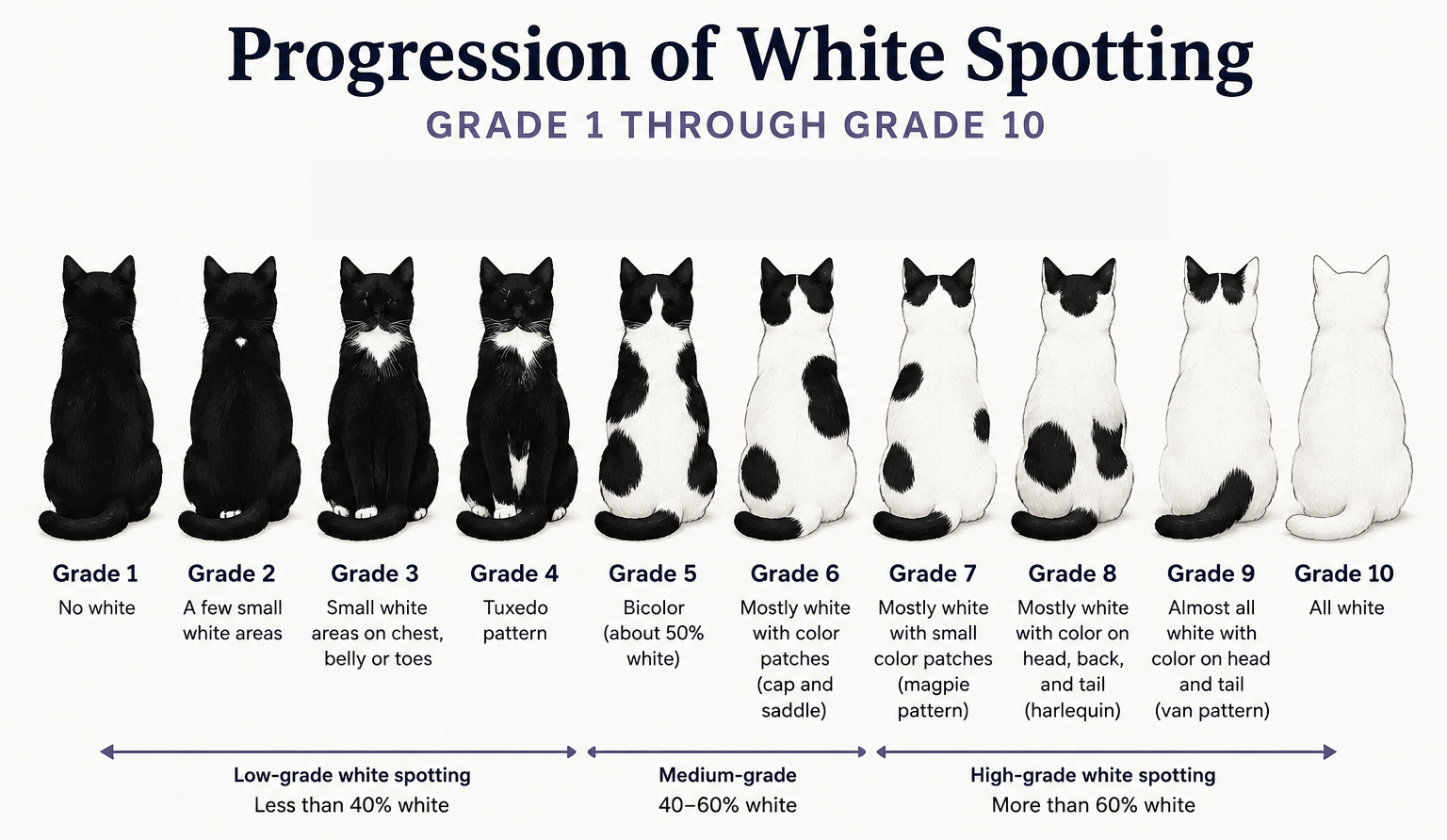
Locket is a term used to refer to cats with a small white patch or spot on the cat’s neck/chest or even on its stomach.
Calico
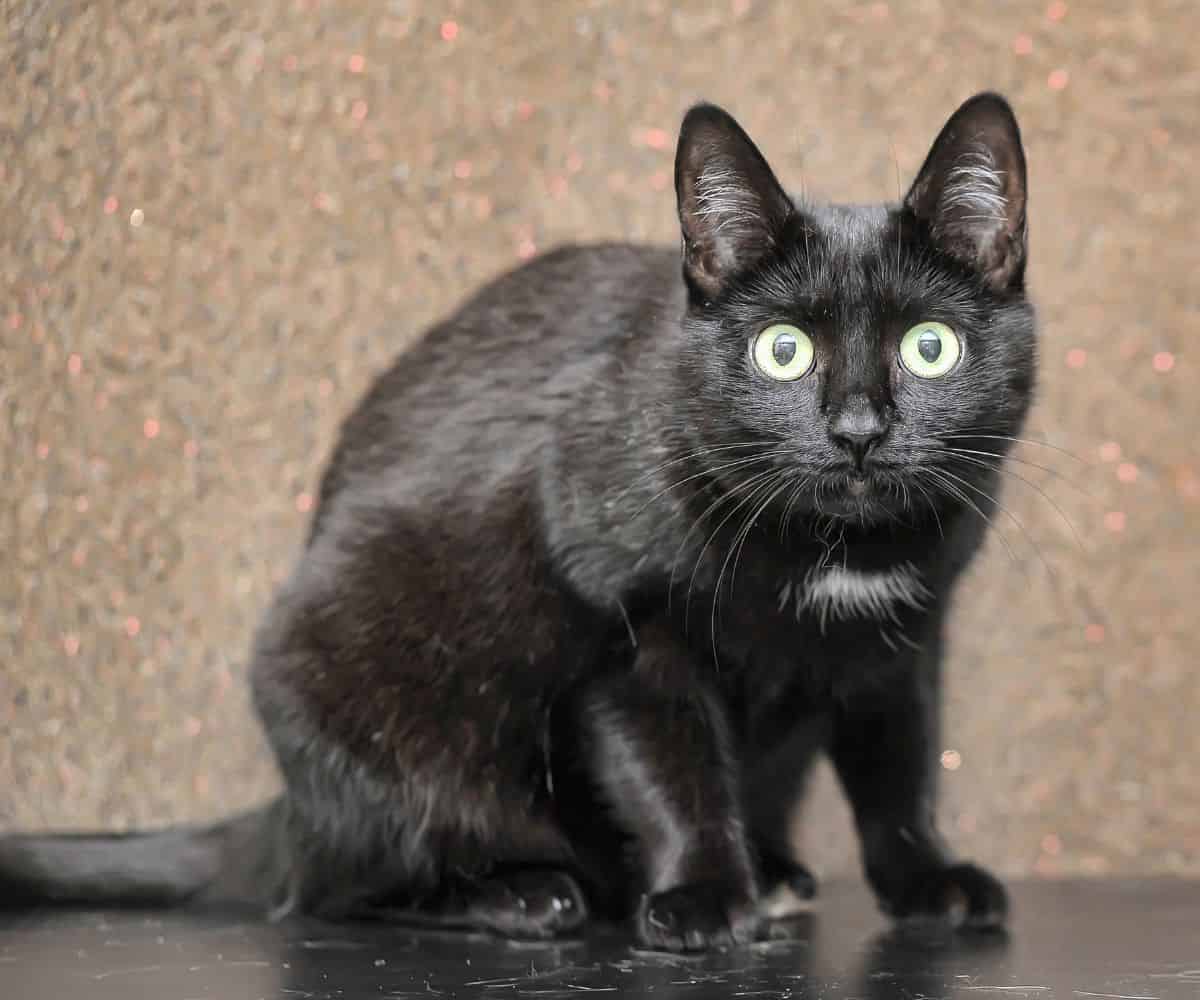
A Calico cat can be any tricolored cat whose majority color is usually white.
White-mitted
White-mitted is a term used to refer to a cat with only white on its paws. They can be described as looking as though they are wearing white gloves, mittens, or socks.
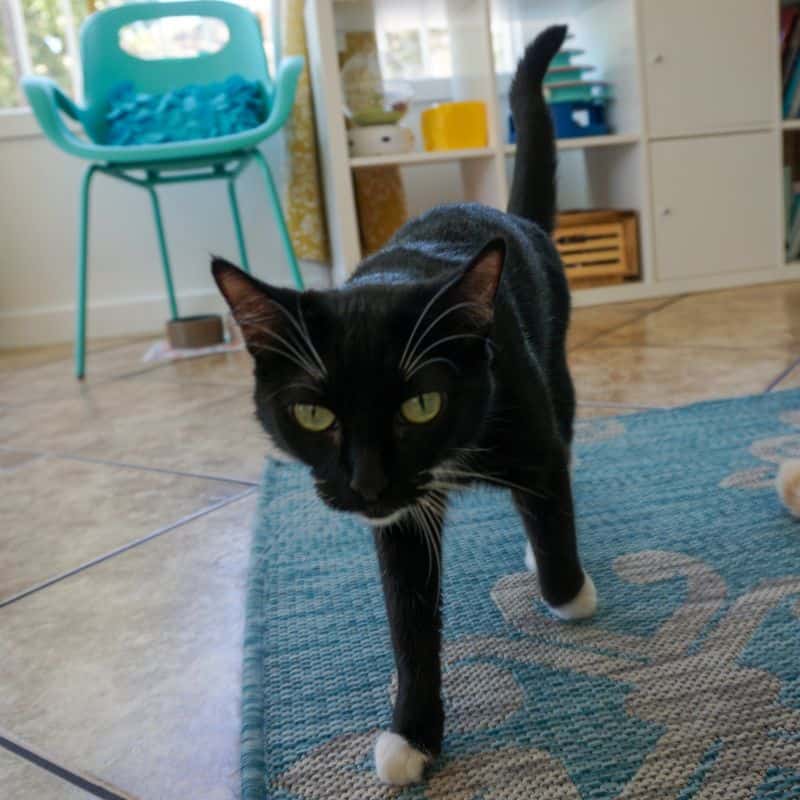
Snowshoe cats are a colorpoint cat breed whose feet and muzzle are white.
Caliby
Caliby is a term used to describe a cat whose features resemble that of a calico, a tri-colored cat, and a tabby, a cat who has one or more of five unique patterns including swirls, mackerel stripes, spots, patches, and ticked.
Van pattern
Van cats (not to be confused with the landrace Van cat breed) are usually more than 80 % white, and the areas that are not white are usually just the ears, top of the head, and tail.
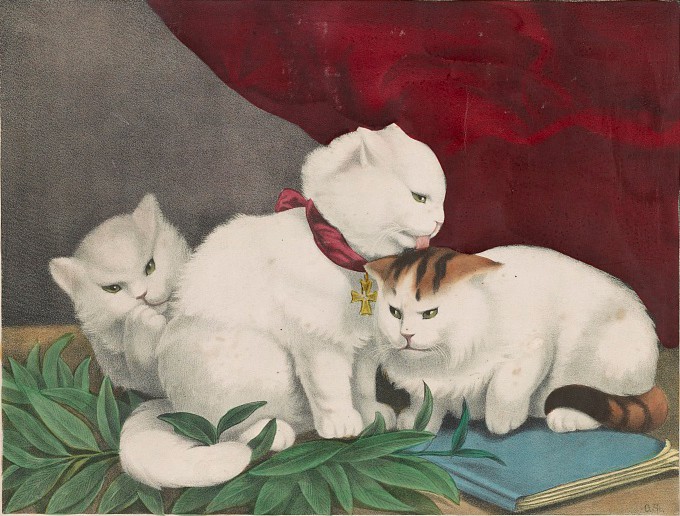
Harlequin cats
Harlequin cats are between 60 and 80% white, with colors on the head, tail, and some spots of color on the back and body of the cat. The tail of the cat is always entirely a non-white color. Each Harlequin cat has a unique arrangement of patches.

Tuxedo
Tuxedo cats are recognized by their distinct black and white markings that almost resemble men’s formal wear with a white chest, belly, paws, and sometimes face.
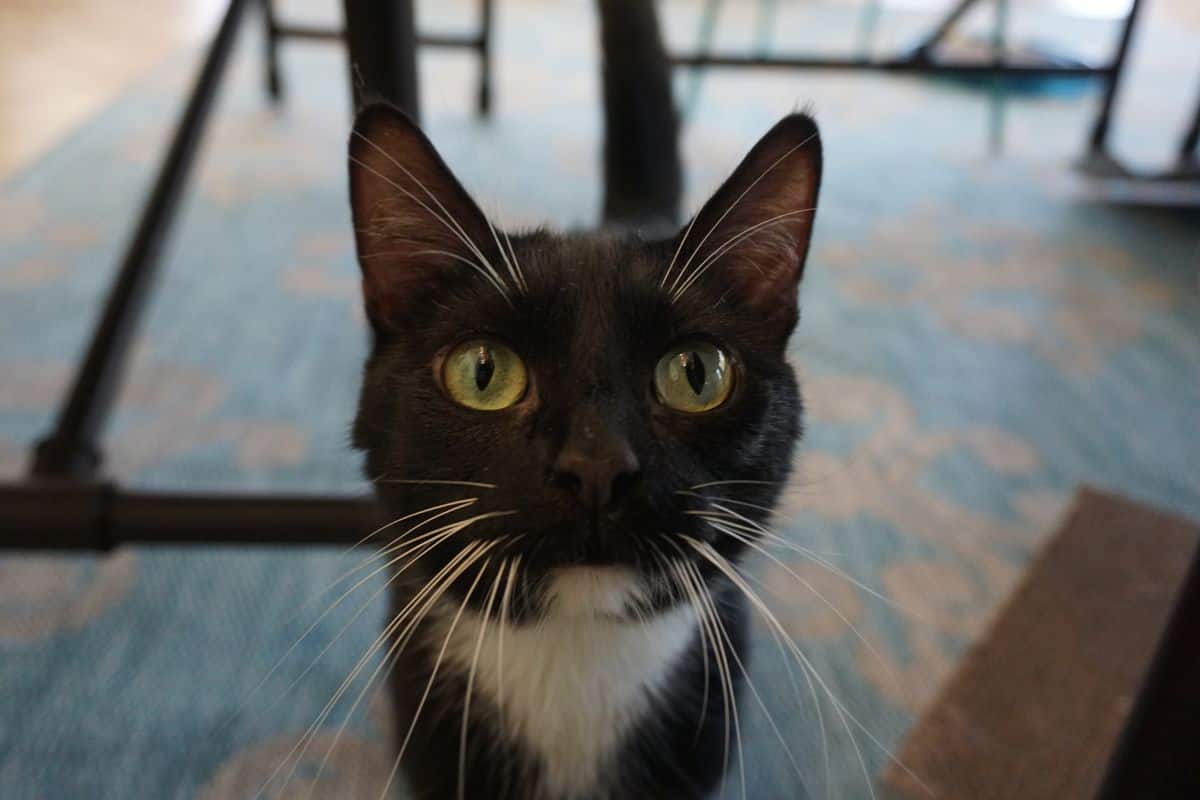
Mask and mantle
Mask and mantle is a term used to describe a cat that has colored fur around its eyes, ears, and forehead and white fur around the nose, mouth, chin, neck, and chest.
On mask and mantle cats, the the coat is mostly white, with color appearing as a “mask” on the face and a “mantle” or “cape” over the back.
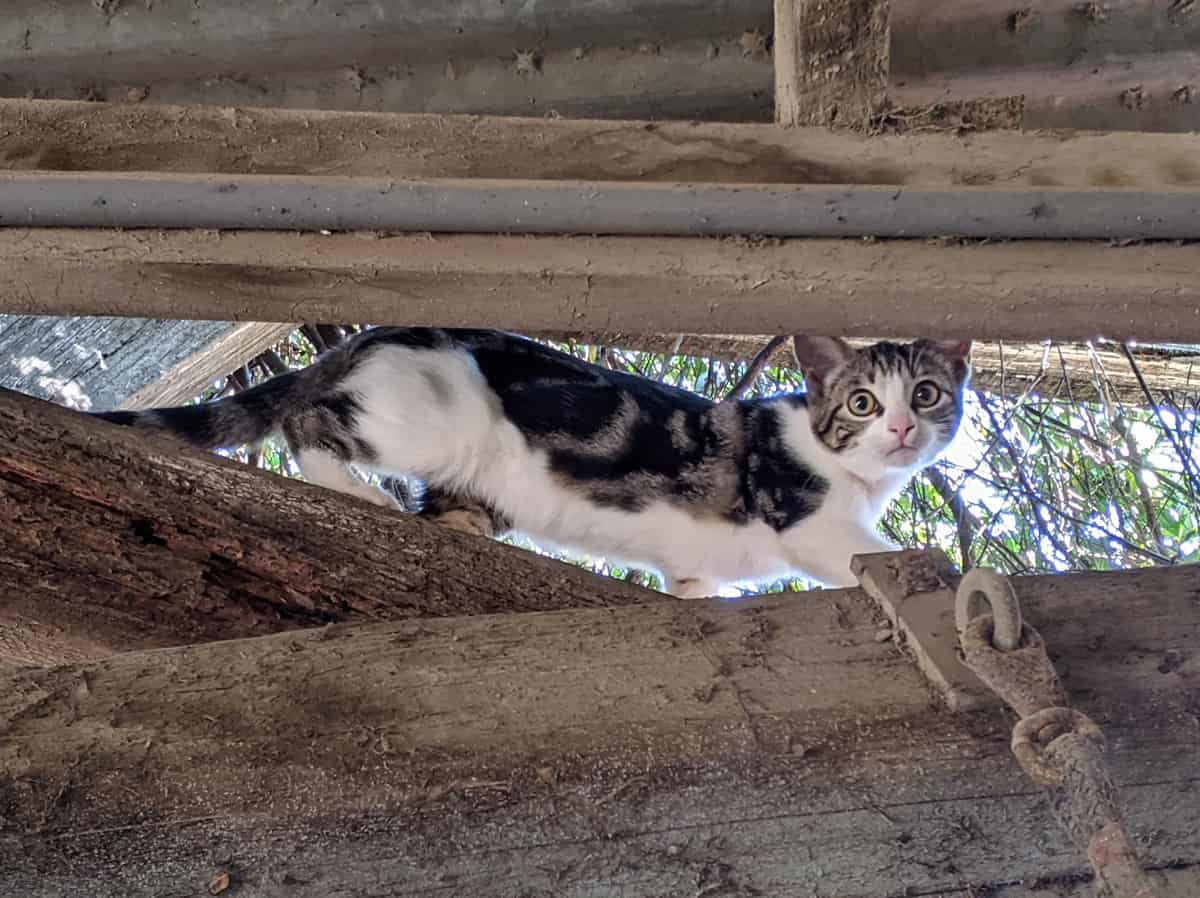
Cap and saddle:
Cap and saddle is a term that is very similar to the mask and mantle, except they don’t have a full mask of color. Instead, the color only starts above the eyes and does not go as far down on the face as a mask and mantle pattern does.

The pattern name comes from the cats having a colored “cap” on the head and a colored “saddle” on the back, while the rest of the coat is predominantly white. The cap and saddle may be of any color depending on the cat’s genetic makeup, from solid black, blue, red, or cream, to tortoiseshell, tabby, or calico patterns. The placement and size of the cap and saddle markings can vary greatly from cat to cat.
Why no two white-spotted cats look alike
Even cats that inherit the same white spotting gene can have dramatically different markings. That’s because the gene controls how much white appears on the coat, but not the exact shape or placement of the white patches.
During early fetal development, specialized cells called melanocytes migrate from the developing neural crest to the skin and hair follicles. These cells produce the pigment that gives a cat its coat color. If some melanocytes do not reach certain areas before development is complete, those areas grow white fur instead.
The migration of melanocytes is not perfectly predictable. Small differences in when the cells divide, move, and stop spreading mean that each kitten develops its own unique pattern. Even littermates with the same parents and the same white spotting gene can have completely different markings.
This is why no two tuxedo, harlequin, or van-pattern cats are exactly alike. The amount of white may be similar, but the arrangement of patches is as unique as a fingerprint.
Breeds known for white spotting
- British Shorthair
- Maine Coon
- Japanese Bobtail
- Norwegian Forest Cat
- Cornish Rex
- Munchkin
- American Shorthair
- Scottish Fold
- Ragamuffin
- Turkish Van
- Turkish Angora
Eye color in cats with white spotting
The white spotting or piebald gene can, in some cases, affect the color of a cat’s eyes. When white spotting occurs over the eyes in the developmental stage, it can sometimes result in a lack of pigment in the eyes.
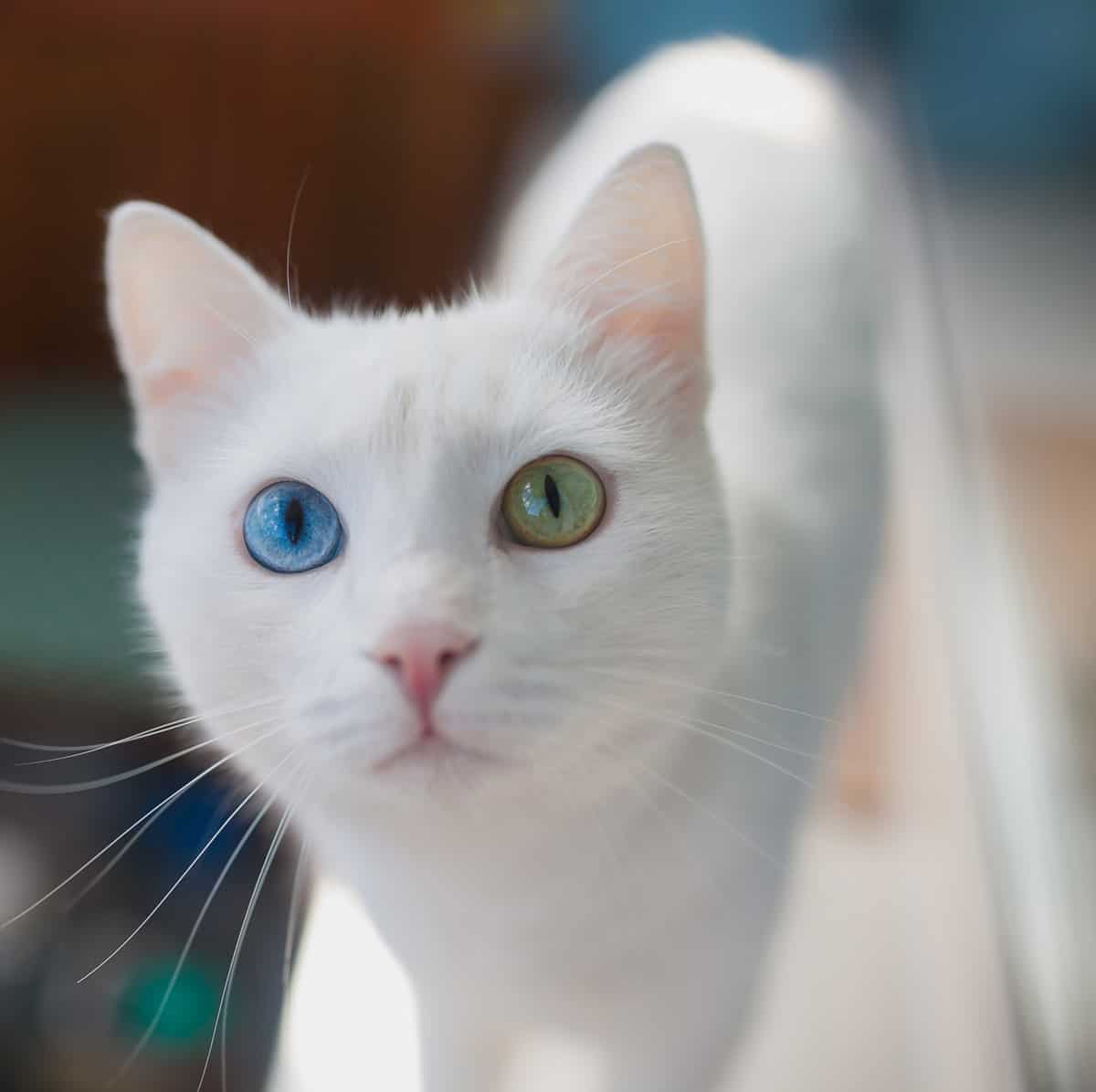
This can happen with both eyes or just one eye depending on how the melanocytes migrate and proliferate. When it does happen, the eye or eyes will be blue!
Why it is important to understand piebaldism in cats
Researchers are eager to understand and learn more about white spotting and piebaldism because it could potentially help our understanding of more serious diseases in humans that are caused by cells not migrating or proliferating fast enough in the early embryonic stages.
Piebaldism is actually just one example in a group of neurocristopathies or diseases that involve abnormal movement, generation, or differentiation of neural crest cells. Some of the diseases that fall under this umbrella include cancers of the nervous system, congenital heart defects, deafness, and even digestive problems.
FAQs about white spotting in cats
Are white-spotted cats rare?
No. White spotting is common in domestic cats and appears in many familiar coat patterns, including tuxedo, bicolor, harlequin, and van-pattern cats.
Can any breed have white spotting?
Yes. White spotting can appear in many cat breeds as well as mixed-breed domestic cats. The amount of white can vary from a small locket on the chest to an almost entirely white coat.
Is white spotting the same as piebaldism?
Yes. In cats, white spotting is often described as a form of piebaldism. Piebaldism occurs when pigment-producing cells do not reach every area of the skin during early development, leaving some areas without pigment.
Is white spotting different from albinism?
Yes. White spotting and albinism are different. White spotting creates patches of unpigmented fur, while albinism affects pigment production more broadly across the body.
Can a cat become more white as it ages?
A cat’s inherited white spotting pattern is set before birth, so the main pattern usually does not change. However, some cats may develop scattered white hairs as they age, especially around the face, chest, or body.
White spotting quick facts
- Caused by incomplete migration of pigment cells.
- Controlled primarily by the KIT gene.
- Every pattern is unique.
- White spotting is different from albinism.
- White spotting can occur with virtually any coat color.
Final takeaways about white spotting
White spotting is one of the most recognizable coat patterns in domestic cats, yet it begins with microscopic events during early fetal development. From a tiny white locket to the striking van pattern, every white-spotted cat reflects a unique combination of genetics and pigment cell migration. As researchers continue to study these processes, they are learning not only more about feline coat color, but also about the biology of cell development in other mammals, including humans.
References
Christensen, A. C. (2000). Cats as an aid to teaching genetics. Genetics, 155(3), 999-1004. https://doi.org/10.1093/genetics/155.3.999
David, V. A., Menotti-Raymond, M., Wallace, A. C., Roelke, M., Kehler, J., Leighty, R., … & Ryugo, D. K. (2014). Endogenous retrovirus insertion in the KIT oncogene determines white and white spotting in domestic cats. G3: Genes, Genomes, Genetics, 4(10), 1881-1891.
Hartwell, S. (n.d.). Bicolours – Tuxedo and magpie cats. The Messybeast. messybeast.com/bicolours.htm
Robinson, R. (2013). Genetics for Cat Breeders: International Series in Pure and Applied Biology. Elsevier.
Thibos, L. N., Levick, W. R., & Morstyn, R. (1980). Ocular pigmentation in white and Siamese cats. Investigative Ophthalmology & Visual Science, 19(5), 475-486.
This article was originally written on November 25, 2022 and has since been updated.